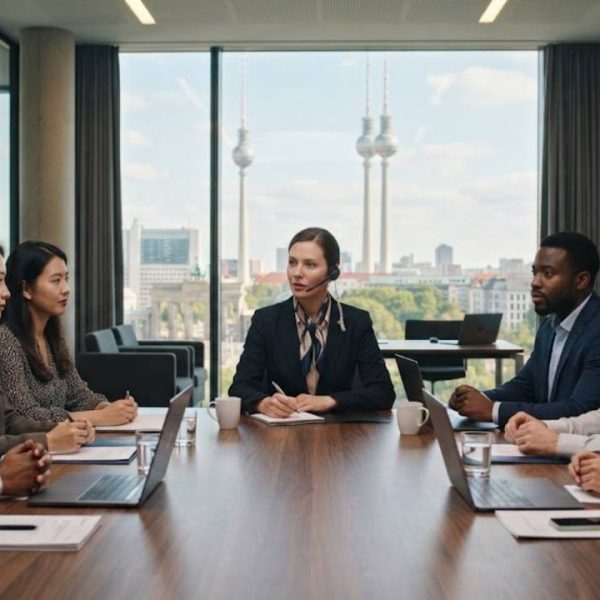
Berlin has become one of Europe's most international business cities. Start-ups, technology companies, research institutes, government bodies, embassies and trade associations bring visitors from around the world to the German capital every day. Many meetings take place in English, but not all of them. Negotiations with German public authorities, discussions with family-owned Mittelstand companies, notary appointments and meetings with investors from Eastern Europe or Asia often require professional interpreting. Knowing when to book an interpreter and how to work with one can make these meetings far more productive.
Why Berlin is different
For short calls or follow-up meetings, over the phone interpretation offers a practical alternative to on-site presence. It works well when participants already know each other and the agenda is focused. Many Berlin companies use it to keep momentum between in-person sessions.
Berlin combines the political centre of Germany with a fast-growing digital economy and a large international population. English is widely spoken in start-ups and creative industries, which leads some visitors to assume they will never need German. In practice, the situation depends heavily on who you are meeting. Civil servants, lawyers, notaries, tax advisers, landlords and many traditional companies expect to work in German, especially when legal or financial commitments are involved.
Types of interpreting for business meetings
For small meetings and negotiations, consecutive or liaison interpreting is usually the best choice. The interpreter sits at the table and renders what each person says after they pause, in both directions. It requires no equipment and works well for discussions of up to eight or ten participants. For larger events, such as investor presentations, board meetings with many participants or conferences, simultaneous interpreting with headsets allows the meeting to proceed without pauses. Whispered interpreting is a middle option for one or two listeners in a larger meeting.
Remote interpreting has also become common. For short calls or follow-up meetings, an interpreter can join via video conference, saving travel time and cost. For important first meetings and complex negotiations, however, having the interpreter in the room usually produces better results.
Preparing documents in advance
Interpreting works best when the written material is also available in the right languages. Agendas, presentations, term sheets, draft contracts and technical specifications should ideally be shared before the meeting. Companies meeting German partners often use professional German to English translation services to understand German-language documents they receive in advance, such as offers, regulatory notices or contract drafts. This allows the team to arrive well prepared and to focus the meeting on decisions rather than on clarifying basic content.
Meetings with Eastern European partners
Berlin has close ties with Central and Eastern Europe, and many meetings involve partners from Poland, Ukraine, the Baltic states or Russian-speaking countries. In these cases, three languages may be involved: German, English and Russian or another regional language. Planning which language combinations are needed, and whether one interpreter can cover them or several are required, is an important step. Written material such as contracts, company registration documents or technical specifications may also need accurate Russian translation so that all parties base their discussion on the same information.
Briefing your interpreter
A good interpreter is only as
effective as the information they receive. Before the meeting, share the agenda, participant list, presentations and any specialised terminology. Explain the purpose of the meeting and any sensitive topics. If company-specific abbreviations or product names will be used, provide a short glossary. A brief conversation with the interpreter before the meeting starts helps them understand your goals and adapt their approach.
Keeping terminology consistent across projects
Companies that hold regular meetings in Germany often produce a steady flow of translated material: minutes, reports, contracts and marketing content. Managing this through email quickly becomes chaotic. Many organisations use Translation workflow management software to coordinate translation requests, store approved terminology and share glossaries with both translators and interpreters. When the interpreter uses the same terms as the written documents, the entire communication feels consistent and professional.
During the meeting
Speak directly to your counterpart, not to the interpreter. Use clear sentences and pause regularly. Avoid jokes and idioms that do not translate well, and check understanding on key points. Allow extra time: consecutive interpreting roughly doubles the speaking time. Do not hold side conversations in a language that the interpreter is expected to translate, since this creates confusion about what should be rendered.
Trade fairs and events
Berlin hosts major trade fairs and conferences throughout the year, from consumer electronics and tourism to health, mobility and food. During these periods, qualified interpreters are in high demand and often booked months in advance. Companies planning to meet partners at a fair should reserve interpreters early and clarify whether they will be needed at the stand, in private meeting rooms or at evening events. Preparing short product presentations in the relevant languages also helps visitors understand your offer quickly.
Choosing the right professional
- Look for trained interpreters with experience in your industry.
- Check language combinations and whether they work in both directions.
- Ask about confidentiality and professional ethics.
- Book early, especially for less common languages and busy trade fair periods.
- Clarify fees, travel costs and cancellation terms in advance.
Clear communication, better results
An interpreter in Berlin is not a luxury but a practical tool that helps international companies negotiate confidently, avoid misunderstandings and build trust with German partners. Combined with well prepared, accurately translated documents, professional interpreting turns language differences into a manageable detail rather than an obstacle to doing business.